How to Choose the Right Commercial Kitchen Equipment for Your Restaurant?
Setting up a restaurant kitchen is one of the most important steps when starting or expanding a food business. The right commercial kitchen equipment can improve workflow, save time, support food quality, and make everyday operations easier.
However, choosing equipment is not simply about buying the biggest or most expensive machines. Your restaurant’s menu, kitchen space, expected production volume, budget, and working process should all be considered before making a purchase.
If you are planning a restaurant kitchen in the UAE, this guide will help you understand the key factors to consider when selecting commercial kitchen equipment.
1. Start With Your Restaurant Menu
Your menu should be the starting point when planning your commercial kitchen.
Different types of restaurants require different equipment. A restaurant serving biryani and grilled food will have different requirements from a bakery, cafe, fast food outlet, or cloud kitchen.
For example:
- Indian restaurants may require cooking ranges, tandoors, biryani equipment, fryers, and preparation equipment.
- Arabic restaurants may need shawarma equipment, grills, cooking ranges, ovens, and refrigeration.
- Bakeries may require deck ovens, dough mixers, proofers, refrigeration, and bakery preparation equipment.
- Cafes may need coffee machines, beverage equipment, refrigeration, display counters, and preparation tables.
- Fast-food restaurants may require fryers, griddles, grills, cooking ranges, refrigeration, and food holding equipment.
- Cloud kitchens may need compact and highly efficient equipment designed around multiple food-production stations.
Before purchasing anything, make a list of the dishes you plan to prepare and identify the equipment required for each preparation and cooking process.
2. Consider Your Kitchen Size and Layout
Available space is another major factor when choosing commercial kitchen equipment.
A common mistake is purchasing equipment first and trying to fit everything into the kitchen later. This can create an inefficient workspace and make movement between preparation, cooking, washing, and storage areas difficult.
A well-planned commercial kitchen should provide a logical workflow from:
Receiving → Storage → Preparation → Cooking → Plating/Service → Washing
Measure the available space before ordering equipment. Consider the dimensions of doors, passages, work areas, ventilation points, gas connections, electrical connections, drainage, and other fixed installations.
The equipment should fit the kitchen without making the workspace crowded.
3. Identify the Essential Equipment You Need
Once your menu and kitchen layout are clear, identify the equipment required for daily operations.
Cooking Equipment
Cooking equipment forms the core of many commercial kitchens.
Depending on your menu, you may need:
- Gas cooking ranges
- Electric cooking equipment
- Fryers
- Griddles
- Charbroilers
- Tandoors
- Commercial ovens
- Bain marie units
- Cooking kettles
- Specialty cooking equipment
Choose equipment based on the type and volume of food you prepare rather than selecting equipment simply because it has more features.
Commercial Ovens
Restaurants, bakeries, cafes, and catering kitchens may require different types of ovens.
Common options include
- Combi ovens
- Deck ovens
- Convection ovens
- Mandi ovens
- Tandoor ovens
- Pizza ovens
- Specialty ovens
The right oven depends on the cooking method, menu, capacity, available space, and expected daily usage.
Commercial Refrigeration
Proper refrigeration is essential for storing ingredients safely and maintaining kitchen efficiency.
Depending on your requirements, you may consider:
- Upright refrigerators
- Upright freezers
- Under counter refrigerators
- Preparation counters with refrigeration
- Walk in cold rooms
- Chillers and freezers
When selecting refrigeration equipment, consider storage capacity, temperature requirements, kitchen space, energy consumption, and accessibility.
Food Preparation Equipment
Food preparation can take up a significant amount of time in a commercial kitchen.
Depending on the operation, equipment may include:
- Vegetable preparation machines
- Food processors
- Dough mixers
- Meat preparation equipment
- Vegetable cutters
- Planetary mixers
- Slicers
- Blenders
The right preparation equipment can help improve consistency and reduce manual workload.
Stainless Steel Work Tables and Sinks
Stainless steel equipment is widely used in professional kitchens because it is durable, practical, and easy to clean when properly maintained.
Common stainless steel requirements include:
- Work tables
- Preparation tables
- Wall shelves
- Storage cabinets
- Handwash sinks
- Preparation sinks
- Pot wash sinks
- Service counters
The size and configuration should be planned according to the available space and kitchen workflow.
Dishwashing and Warewashing Equipment
Cleaning and washing are essential parts of restaurant operations.
Depending on the size of the kitchen, you may require:
- Commercial dishwashers
- Hood-type dishwashers
- Glasswashers
- Pre rinse units
- Pot washing systems
- Stainless steel sinks
A suitable dishwashing setup can help improve the speed and organization of the washing area.
4. Choose Equipment According to Your Expected Capacity
Your equipment should be capable of handling your expected workload.
For example, a small cafe serving a limited number of customers may not need the same cooking capacity as a large restaurant serving hundreds of meals every day.
Consider:
- Number of customers
- Peak hour demand
- Number of meals produced
- Batch size
- Operating hours
- Number of kitchen staff
Buying equipment that is too small can create delays during busy periods. On the other hand, buying equipment that is unnecessarily large can consume valuable kitchen space and increase the initial investment.
The goal is to select equipment that matches your actual operational requirements.
5. Gas or Electric? Choose According to Your Kitchen
Commercial kitchens may use gas, electricity, or a combination of both.
Gas equipment can be suitable for restaurants that require high cooking output and direct heat control. Electric equipment can be useful for applications where precise temperature control and electrical operation are preferred.
Your decision should take into account:
- Available utilities
- Kitchen infrastructure
- Equipment requirements
- Installation requirements
- Operating costs
- Restaurant concept
- Local regulations and safety requirements
It is important to confirm the required gas and electrical specifications before purchasing equipment.
6. Pay Attention to Stainless Steel Quality
Stainless steel is an important consideration when purchasing or fabricating commercial kitchen equipment.
The appropriate stainless steel grade can depend on the equipment, location, application, exposure to moisture, cleaning requirements, and budget.
For food-service environments, equipment should be selected with hygiene, durability, corrosion resistance, and ease of cleaning in mind.
For custom stainless steel fabrication, discuss the required material grade and finish with your kitchen equipment supplier before production.
7. Consider Energy Efficiency
Commercial kitchen equipment operates for many hours every day, so energy consumption can have a significant effect on operating costs.
When comparing equipment, consider:
- Energy consumption
- Gas consumption
- Refrigeration efficiency
- Heating performance
- Equipment capacity
- Operating hours
- Maintenance requirements
The cheapest equipment to purchase is not necessarily the least expensive equipment to operate over its working life.
Look at the overall cost of ownership rather than focusing only on the initial purchase price.
8. Don’t Forget Ventilation and Exhaust
Proper ventilation is an essential part of a commercial kitchen.
Cooking produces heat, smoke, grease, steam, and odors. A properly designed exhaust and ventilation system helps manage these conditions and contributes to a more comfortable working environment.
Depending on the kitchen, the ventilation system may include:
- Exhaust hoods
- Grease filters
- Exhaust fans
- Fresh air systems
- Ducting
- Make up air systems
Ventilation requirements should be considered during the kitchen design stage rather than added as an afterthought.
9. Think About Installation and Maintenance
Buying the equipment is only one part of setting up a commercial kitchen.
Installation, commissioning, preventive maintenance, repairs, and spare parts can all affect the long term performance of your equipment.
Before purchasing, ask your supplier about:
- Installation
- Commissioning
- Warranty
- Spare parts
- Preventive maintenance
- After sales support
- Annual Maintenance Contracts (AMC)
Regular maintenance can help identify potential problems before they lead to major equipment breakdowns.
10. Set a Realistic Budget
A commercial kitchen is a major investment, especially for a new restaurant.
Instead of allocating the entire budget only to cooking equipment, consider the complete kitchen setup, including:
- Cooking equipment
- Refrigeration
- Preparation equipment
- Stainless steel fabrication
- Exhaust and ventilation
- Dishwashing equipment
- Storage
- Installation
- Electrical and gas requirements
- Maintenance
It is also important to distinguish between equipment that is essential from day one and equipment that can be added later.
A professional kitchen equipment supplier can help you balance your operational requirements with your available budget.
11. Work With a Professional Kitchen Equipment Supplier
Commercial kitchen planning involves more than selecting individual machines.
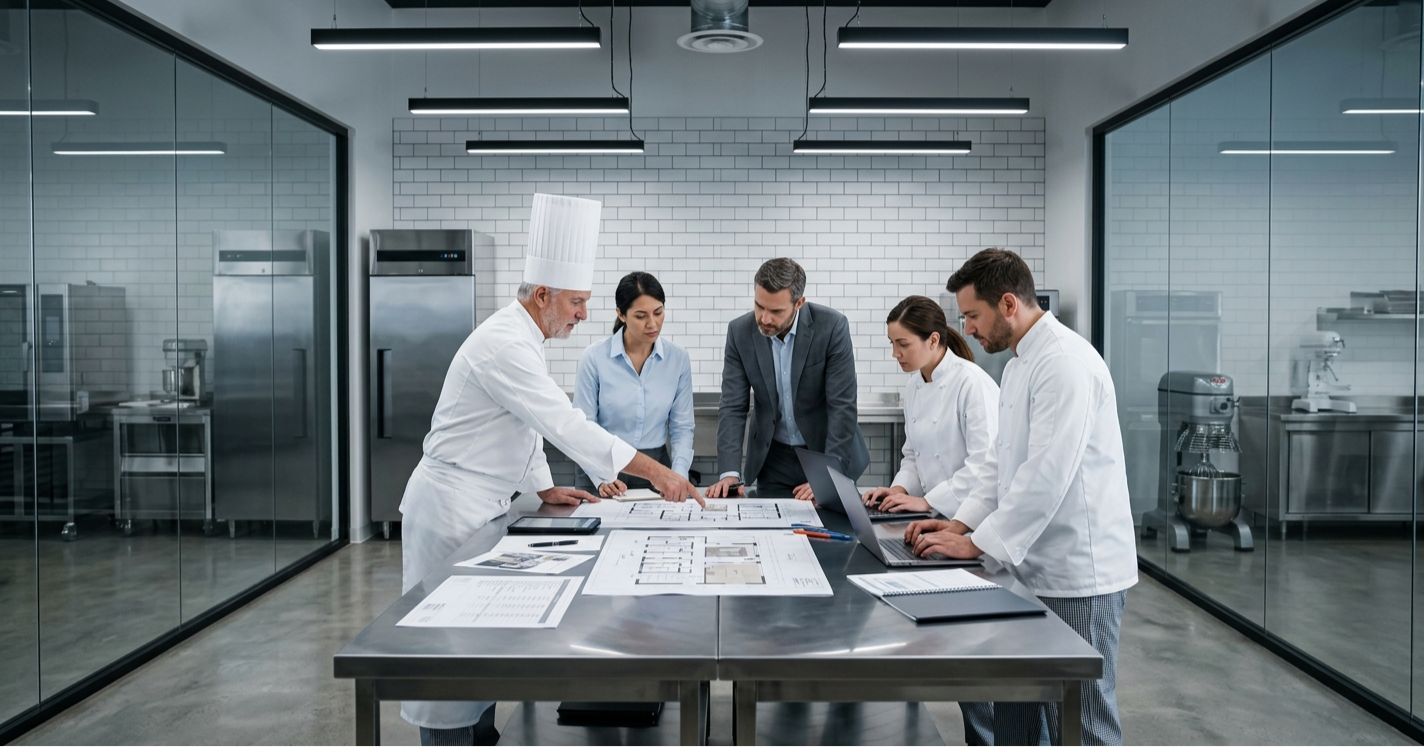
A professional supplier can help you evaluate your menu, available space, workflow, equipment capacity, fabrication requirements, and installation needs.
For a new restaurant project, the process can include:
Site Assessment → Kitchen Design → Equipment Selection → Stainless Steel Fabrication → Supply → Installation → Commissioning → Maintenance
Having these stages coordinated can make the overall project easier to manage.
12. Plan for Future Growth
Your restaurant may grow over time.
When planning the kitchen, consider whether the layout and infrastructure can accommodate future changes such as:
- Higher customer volume
- Additional menu items
- New cooking equipment
- Additional refrigeration
- More preparation space
- Additional staff
Planning for future expansion can reduce the need for major changes later.
Conclusion
Choosing the right commercial kitchen equipment requires careful planning. Your restaurant menu, available space, kitchen workflow, production capacity, utilities, equipment quality, energy consumption, budget, and maintenance requirements should all be considered before making a decision.
Whether you are opening a new restaurant, upgrading an existing kitchen, or setting up a cafe, bakery, catering operation, or cloud kitchen, selecting the right equipment can help create a more organized and efficient working environment.
At Al Tareeq Kitchen Equipment, we provide commercial kitchen equipment and kitchen solutions for restaurants, hotels, cafes, bakeries, catering businesses, and other food service operations in the UAE. Our solutions include equipment supply, commercial kitchen design and planning, stainless steel fabrication, installation, commissioning, and maintenance support.
Planning a commercial kitchen in the UAE? Contact Al Tareeq Kitchen Equipment to discuss your kitchen requirements and equipment needs.
Add a review
Your email address will not be published. Required fields are marked *